
Comparison Chart
Yamaha Silent Piano vs TransAcoustic Comparison Chart: SC3, SH3, TA3 and TC3
A Silent Piano plays through headphones; a TransAcoustic also plays its digital sounds through the piano's own soundboard. Here is how the four systems compare.


Yamaha builds two kinds of hybrid acoustic piano. A Silent Piano (SC3 or SH3) stops the hammers just before they reach the strings, so you can play through headphones with sampled Yamaha CFX and Bösendorfer sound. A TransAcoustic (TA3 or TC3) does the same, and adds a transducer that plays those sounds through the piano’s own soundboard, so you can turn the volume down without headphones. Every system is still a full acoustic piano when switched off.
The Differences in Brief
- SC3 and TC3 come on Yamaha’s b series uprights (the b1, b2 and b3).
- SH3 and TA3 come on Yamaha’s Japanese uprights (U and YUS series) and on grands (the SH3 on the GC, CX and SX series; the TA3 on the GC1, C1X and C3X).
- Sounds: the SH3 and TA3 have 25 voices; the SC3 and TC3 have 12.
- Speakers: only the TransAcoustic models play out loud without headphones, through the soundboard.
Yamaha Silent and TransAcoustic Specifications
| Specification |  |
|
|
 |
|---|---|---|---|---|
| Availability | ||||
| Upright Models | b1 SC3 (b3 SC3, b2 SC3 and P22 SC3 are listed as Discontinued) | YUS5, YUS3, YUS1, U3, U1, P121 (P121 SH3 is on the lineup page but not in the specs table) | YUS5, YUS3, YUS1, U3, U1 | b1, b2, b3; B10, B20, B30 (marked New on the TC3 overview page; not yet on the lineup or specs pages) |
| Grand Models | — (GB1K SC3 is listed as Discontinued) | S7X, S6X, S5X, S3X, C7X, C6X, C5X, C3X, C2X, C1X, GC2, GC1 | C3X, C1X, GC1 | — |
| Silencing | ||||
| Silencing Mechanism | Hammer shank stopper operated by center pedal (discontinued GB1K SC3 grand: by silencing lever) | Upright: hammer shank stopper operated by center pedal (YUS5: by silencing lever). Grand: hammer shank stopper operated by motor drive | Upright: hammer shank stopper operated by center pedal (YUS5: by silencing lever). Grand: hammer shank stopper operated by motor drive | Hammer shank stopper operated by center pedal |
| Grand Action | — (discontinued GB1K SC3: Quick Escape mechanism) | Grand: Quick Escape mechanism. Upright: — | Grand: Quick Escape mechanism. Upright: — | — |
| Pedals | Damper, Silencing pedal, Soft | Upright: Damper/Silencing pedal/Soft (YUS5: Damper/Sostenuto/Soft). Grand: Damper/Sostenuto/Shift | Upright: Damper/Silencing pedal/Soft (YUS5: Damper/Sostenuto/Soft). Grand: Damper/Sostenuto/Shift | Damper, Silencing pedal, Soft |
| Sensors | ||||
| Key Sensors | Non-contact continuous detection electromagnetic inductive sensor | Non-contact continuous detection electromagnetic inductive sensor | Non-contact continuous detection electromagnetic inductive sensor | Non-contact continuous detection electromagnetic inductive sensor |
| Hammer Sensors | — | Grand: Non-contact 2-point optical fiber sensor. Upright: — | Grand: Non-contact 2-point optical fiber sensor. Upright: — | — |
| Pedal Sensors | Damper: continuous detection sensor; Soft: On/Off detection sensor | Damper: continuous detection sensor; Soft/Shift: On/Off detection sensor; Sostenuto: On/Off detection sensor (grands and YUS5 only) | Damper: continuous detection sensor; Soft/Shift: On/Off detection sensor; Sostenuto: On/Off detection sensor (grands and YUS5 only) | Damper: continuous detection sensor; Soft: On/Off detection sensor |
| Sound | ||||
| Piano Samples | Yamaha CFX, Bösendorfer Imperial | Yamaha CFX, Bösendorfer Imperial | Yamaha CFX, Bösendorfer Imperial | Yamaha CFX, Bösendorfer Imperial |
| Binaural Sampling | Yes (Yamaha CFX, Bösendorfer Imperial) | Yes (Yamaha CFX, Bösendorfer Imperial) | Yes (Yamaha CFX, Bösendorfer Imperial) | Yes (Yamaha CFX, Bösendorfer Imperial) |
| Forte Piano | — | Yes | Yes | — |
| Virtual Resonance Modeling (VRM) | Yes | Yes | Yes | Yes |
| Grand Expression Modeling | Yes | Yes | Yes (GC1 TA3: —) | Yes |
| Key-off Samples / Smooth Release | Yes / Yes | Yes / Yes | Yes / Yes | Yes / Yes |
| Number of Voices | 12 | 25 | 25 | 12 |
| Voices for Song Playback | — | 480 XG Voices + 12 Drum/SFX Kits | 480 XG Voices + 12 Drum/SFX Kits | — |
| Polyphony (Max.) | 256 | 256 | 256 | 256 |
| Effects | Reverb, Brilliance, Stereophonic Optimizer (piano Voices other than “CFX Grand” and “Bösendorfer”) | Reverb, Brilliance, Stereophonic Optimizer (piano Voices other than “CFX Grand” and “Bösendorfer”) | Reverb, Brilliance, Stereophonic Optimizer (piano Voices other than “CFX Grand” and “Bösendorfer”) | Reverb, Brilliance, Stereophonic Optimizer (piano Voices other than “CFX Grand” and “Bösendorfer”) |
| Speakers / Soundboard Transducer | — | — | Soundboard Drive System: TransAcoustic™ technology (transducer drives the soundboard; no speaker unit) | Soundboard Drive System: TransAcoustic™ technology (transducer drives the soundboard; no speaker unit) |
| AC Adaptor / Power Consumption | PA-300C; 8W | PA-300C; 8 W | PA-500; 26 W | PA-500; 17 W |
| Songs and Recording | ||||
| Preset Songs | 12 Voice Demo Songs, 50 Classics | 25 Voice Demo Songs, 50 Classics | 25 Voice Demo Songs, 50 Classics | 12 Voice Demo Songs, 50 Classics |
| MIDI Recording | 10 songs, 2 tracks, approx. 500 KB; SMF (Format 0) | 10 songs, 2 tracks, approx. 500 KB/Song; SMF (Format 0) | 10 songs, 2 tracks, approx. 500 KB/Song; SMF (Format 0) | 10 songs, 2 tracks, approx. 500 KB; SMF (Format 0) |
| Audio Recording | WAV (44.1 kHz, 16 bit, stereo), 80 minutes/Song max., to USB flash drive | WAV (44.1 kHz, 16 bit, stereo), 80 minutes/Song max., to USB flash drive | WAV (44.1 kHz, 16 bit, stereo), 80 minutes/Song max., to USB flash drive | WAV (44.1 kHz, 16 bit, stereo), 80 minutes/Song max., to USB flash drive |
| Playback Formats | SMF (Format 0, Format 1); WAV (44.1 kHz, 16 bit, stereo) | SMF (Format 0, Format 1); WAV (44.1 kHz, 16 bit, stereo) | SMF (Format 0, Format 1); WAV (44.1 kHz, 16 bit, stereo) | SMF (Format 0, Format 1); WAV (44.1 kHz, 16 bit, stereo) |
| Functions | ||||
| Metronome | Yes (tempo 5 – 500) | Yes (tempo 5 – 500) | Yes (tempo 5 – 500) | Yes (tempo 5 – 500) |
| Rhythms | 20 Rhythm Patterns | 20 Rhythm Patterns | 20 Rhythm Patterns | 20 Rhythm Patterns |
| Transpose / Tuning | -12 – 0 – +12; 414.8 – 440.0 – 466.8 Hz (approx. 0.2 Hz increments) | -12 – 0 – +12; 414.8 – 440.0 – 466.8 Hz (approx. 0.2 Hz increments) | -12 – 0 – +12; 414.8 – 440.0 – 466.8 Hz (approx. 0.2 Hz increments) | -12 – 0 – +12; 414.8 – 440.0 – 466.8 Hz (approx. 0.2 Hz increments) |
| Display | 7-Seg | 7-Seg | 7-Seg | 7-Seg |
| Connectivity | ||||
| Bluetooth | Yes (Audio/MIDI); may not be available in some areas | Yes (Audio/MIDI); may not be available in some areas (S7X/S6X/S5X/S3X SH3 listed as “Yes”) | Yes (Audio/MIDI); may not be available in some areas | Yes (Audio/MIDI); may not be available in some areas |
| USB | USB TO DEVICE, USB TO HOST; USB flash drive storage; internal memory approx. 1.3 MB | USB TO DEVICE, USB TO HOST; USB flash drive storage; internal memory approx. 1.3 MB | USB TO DEVICE, USB TO HOST; USB flash drive storage; internal memory approx. 1.3 MB | USB TO DEVICE, USB TO HOST; USB flash drive storage; internal memory approx. 1.3 MB |
| Headphone Jacks | Stereo mini jack (x2) | Stereo mini jack (x2) | Stereo mini jack (x2) | Stereo mini jack (x2) |
| Other Jacks | AUX IN (stereo mini jack); MIDI: —; AUX OUT: — | AUX IN (stereo mini jack); MIDI IN/OUT; AUX OUT [L/L+R][R] (standard phone jack) | AUX IN (stereo mini jack); MIDI IN/OUT; AUX OUT [L/L+R][R] (standard phone jack) | AUX IN (stereo mini jack); MIDI: —; AUX OUT: — |
| Apps | Smart Pianist (via Bluetooth MIDI; unavailable in some areas) | Smart Pianist (via Bluetooth MIDI; unavailable in some areas) | Smart Pianist (via Bluetooth MIDI; unavailable in some areas) | Smart Pianist (via Bluetooth MIDI; unavailable in some areas) |
Specifications from Yamaha (Yamaha’s SC3, SH3, TA3 and TC3 pages). Some b series SC3 models and the GB1K SC3 are listed by Yamaha as discontinued.
Head-to-Head Comparisons
Yamaha Silent Piano vs TransAcoustic
Both stop the hammers so you can play through headphones. A TransAcoustic also has a transducer that drives the soundboard, so its digital sounds play through the piano itself, at any volume, without speakers or headphones.
Yamaha SC3 vs SH3
The SC3 is the Silent Piano for the b series (the b1); the SH3 is for Yamaha’s Japanese uprights and its grands. The SH3 has 25 voices to the SC3’s 12, Forte Piano sampling, MIDI in and out and line outputs.
Yamaha TA3 vs TC3
The same split: the TC3 is the TransAcoustic for the b series (b1, b2 and b3), and the TA3 for the U and YUS uprights and the GC1, C1X and C3X grands. The TA3 has 25 voices to the TC3’s 12, plus MIDI and line outputs.
Yamaha SH3 vs TA3
The same 25 voices and recording; the TA3 adds the soundboard transducer. The SH3 comes on more grands (the GC, CX and SX series); the TA3 on the GC1, C1X and C3X.
Silent or TransAcoustic?
If the piano is mainly for practice at night or in an apartment, a Silent Piano does the job: play acoustically by day and through headphones at night. If you also want a quieter piano without headphones, or the digital voices to fill the room, choose a TransAcoustic. Either way, the piano itself is the choice that matters most; see our Japanese upright chart for the pianos the SH3 and TA3 come on.
Visit us at 4237 US-9 N, Freehold, NJ 07728, or call (732) 462-4730.
More Comparison Charts
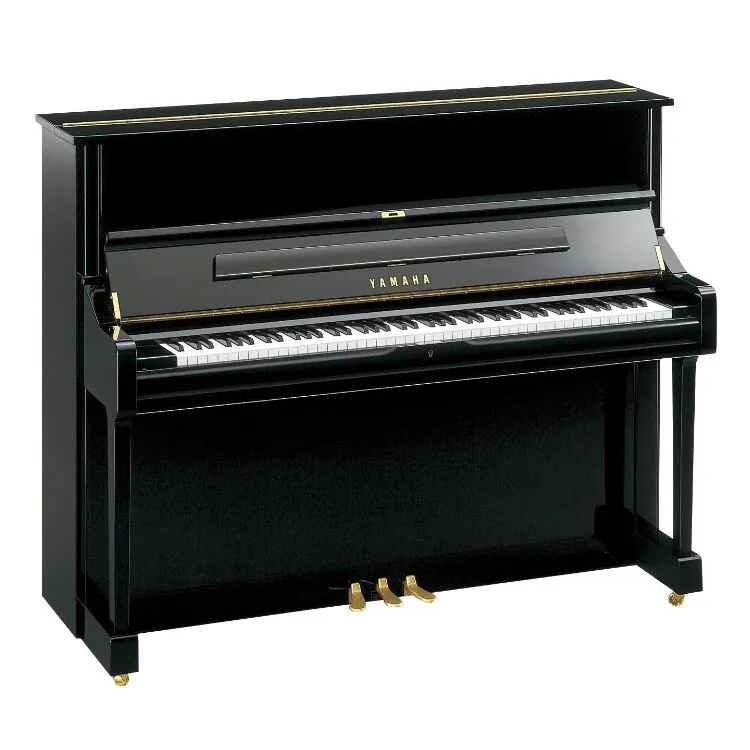 Yamaha U1 vs U3 Comparison ChartThe two U series uprights side by side: height, soundboard, bass strings, construction and the hybrid versions of each.
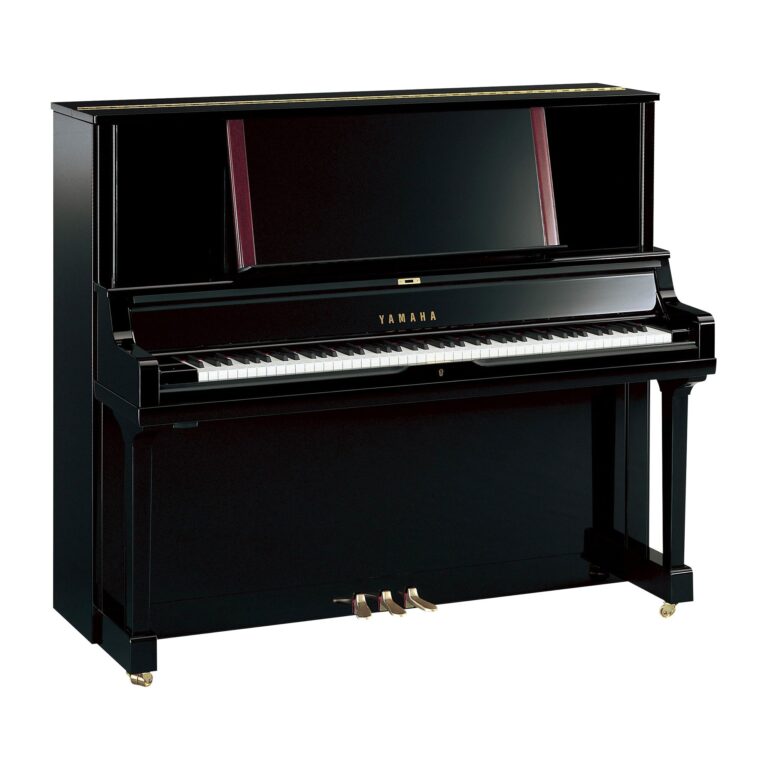
- Yamaha Japanese Upright Comparison Chart: U1, U3, YUS1, YUS3 and YUS5All five Japanese-made Yamaha uprights at a glance: size, weight, series, pedals and hybrid versions.
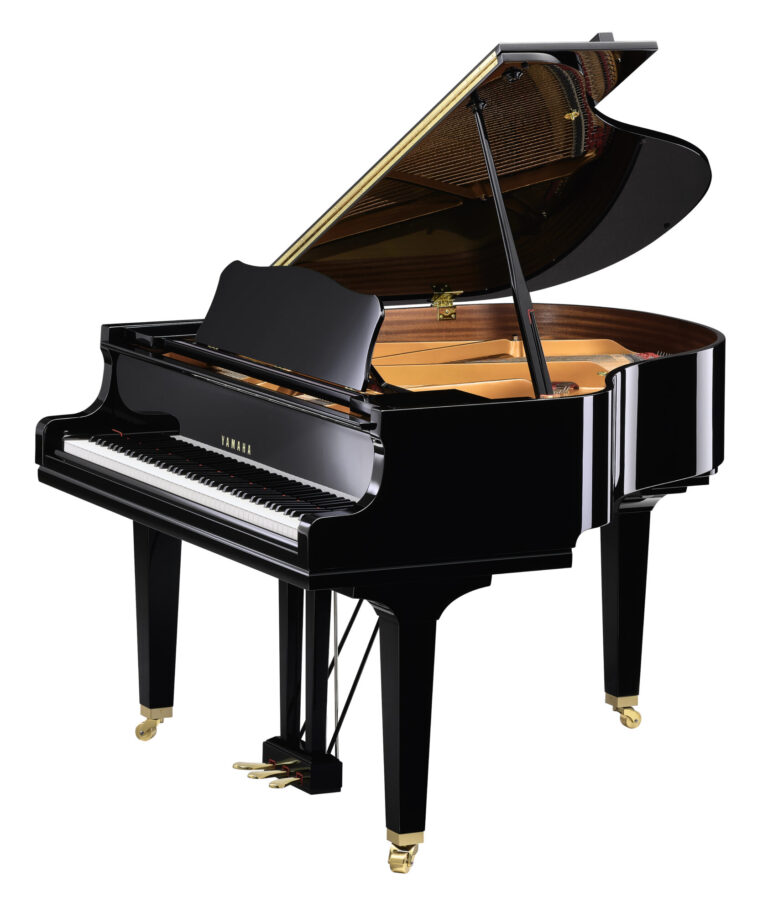
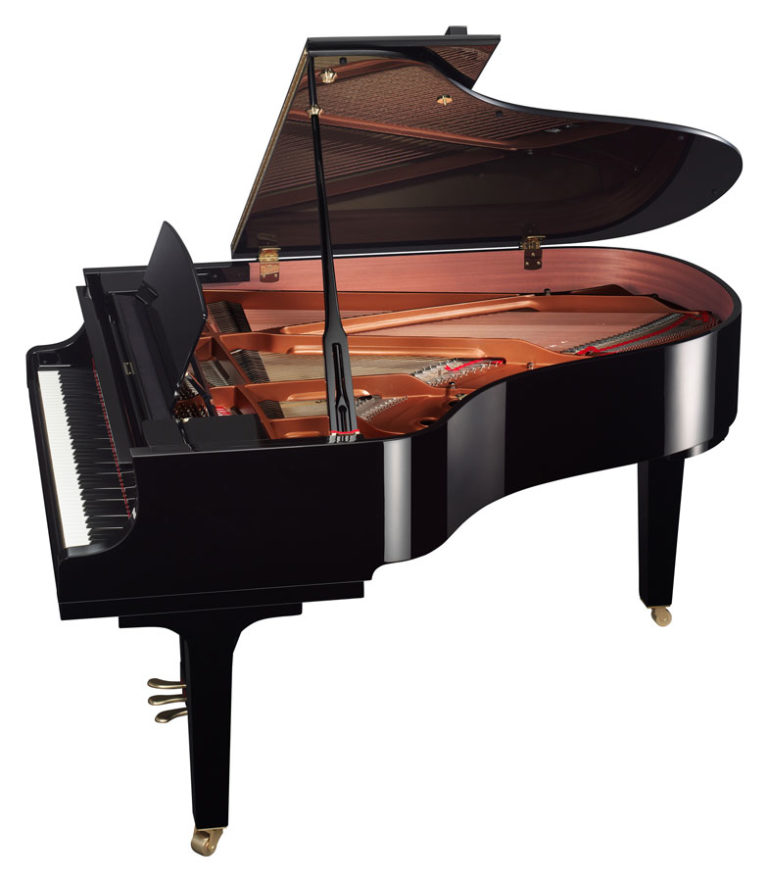 Yamaha CX Series Comparison Chart: C1X to C7XThe six CX series grands side by side, from the 5'3" C1X to the 7'6" C7X: size, weight, construction and hybrid versions.


Yamaha Pianos Comparison ChartsRoland Pianos Comparison ChartsYamaha vs Roland Comparison Charts